How to Use and Maintain Earthing Switches in Substations Safely
Post Time: 2026-07-27 13:52:56
You ensure safety in substations when you use and maintain an earthing switch correctly. Reliable operation depends on strict adherence to procedures and routine care.
You perform regular visual inspections to spot wear or corrosion.
You lubricate moving parts to reduce friction and keep the earthing smooth.
You conduct tests to verify the switch functions properly. Following these steps protects people and equipment.
Earthing Switch Basics
What Is an Earthing Switch?
You use an earthing switch to connect parts of an electrical circuit directly to the ground. This device plays a crucial role in high and medium voltage switchgear. When you operate an earthing switch, you provide a safe path for stray currents and discharge residual charges during maintenance. You enhance the speed of system recovery after faults. Earthing switches isolate incoming and outgoing feeders, ensuring no residual voltage remains in the system. Leading manufacturers such as (CHYF)Yufeng Electric Co., LTD design earthing switches with advanced safety features.
Feature
Description
Arc-Flash Protection
Detects arc faults and rapidly trips the upstream breaker, minimizing risks.
SCADA Integration
Enables remote monitoring and control for real-time data and efficiency.
Advanced Safety Mechanisms
Includes arc fault detection systems for enhanced protection.
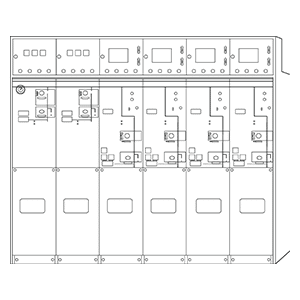
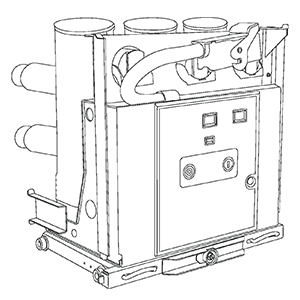
You find earthing switches integrated into products like Metal-clad Switchgear, which offer robust protection and flexible maintenance options.
Role of Earthing in Substations
Earthing creates multiple safety layers that protect both equipment and personnel. You rely on earthing to provide a low-impedance path that quickly conducts fault currents away from equipment. This prevents dangerous touch and step potentials that could injure maintenance workers. Earthing ensures the safety of operational staff and electrical equipment. Voltage levels stay within acceptable limits, and a robust ground connection dissipates faults to the earth. In modern substations, earthing switches are compact and enclosed, often built into Metal-clad Switchgear. You keep the earthing switch closed during maintenance to guarantee a continuous connection to the earth, providing safety for technicians and ensuring reliable operation.
Safe Earthing Switch Operation
Pre-Operation Safety Steps
You must prepare thoroughly before operating an earthing switch in a substation. Start with safety documentation. Review the permit-to-work, job safety analysis, and method statement. Confirm the latest single line diagram and general arrangement drawings. Identify the correct panel and feeder. Check the main earth bar continuity, which should measure less than 1 ohm. Calibrate torque tools for accurate tightening.
Inspect the electrical equipment visually and mechanically. Examine busbar insulation clearance and phase barriers. Tighten busbar joints according to the torque chart. Ensure the breaker racks smoothly in service, test, and isolated positions. Test mechanical interlocks, including the earthing switch and door interlock. Operate space heaters to prevent condensation. Clean panel ventilation louvers.
Perform electrical testing. Measure insulation resistance using a 5 kV tester for medium voltage and a 1 kV tester for low voltage. Confirm phase-to-phase resistance exceeds 1000 megaohms and phase-to-earth resistance exceeds 500 megaohms. Check contact resistance for vacuum circuit breakers, aiming for 30–80 micro-ohms per pole. Verify current transformer polarity and ratio. Confirm earth continuity resistance is less than 1 ohm.
Test protection relays and trip circuits. Check breaker trip coils for redundancy. Operate close coils and test spring charging motors. Inject secondary signals to verify pickup and timing. Confirm trip matrix logic.
Complete functional and operational checks. Operate breakers locally and remotely. Verify mechanical position indicators. Inspect the mimic diagram. Confirm SCADA and DCS status feedback. Simulate interlocking logic.
Tip: Always wear personal protective equipment. Use class 3 or 4 insulating gloves, arc-rated coveralls, dielectric boots, face shields, and helmets. These items protect you from electrical hazards and arc flash burns.
Step-by-Step Operation Guide
You must follow a precise sequence when operating an earthing switch. Begin by disconnecting the load using the load break switch or circuit breaker. Open the disconnector to create a visible isolation gap. Use an approved voltage detection device for verification of isolation. Only after confirming isolation should you close the earthing switch, bonding conductors to ground. Apply personal protective grounds at the work location if required.
When restoring supply, remove personal protective grounds first. Open the earthing switch. Close the disconnector. Close the circuit breaker to restore the load. Never reverse this order. You prevent accidental energization and ensure electrical safety.
Step
Action
1
Disconnect load with circuit breaker or load break switch
2
Open disconnector for visible isolation
3
Perform verification of isolation with voltage detector
4
Close earthing switch to ground conductors
5
Apply personal protective grounds if required
6
Remove grounds, open earthing switch, restore supply
You must repeat verification at each stage. This process ensures that the electrical circuit remains safe for maintenance.
Key Safety Precautions
You must implement several safety precautions to prevent accidental energization during earthing switch operation. Use mechanical and electrical interlocks to block unsafe actions. Adhere to strict operational procedures, including pre-operational checks and regular maintenance. Inspect the earthing switch for damage or rust. Test the switch to confirm smooth operation and proper locking. Clean and lubricate the switch regularly.
Only qualified personnel should operate the earthing switch. Provide training on safety protocols and correct handling. Training programs cover grounding principles, electrical system design, and practical applications. You learn to apply correct bonding practices and perform soil resistivity tests.
Note: International standards, such as IEC, require earthing switches in high-voltage systems. These standards mandate isolation and grounding to protect personnel and equipment from live circuits. Visual and mechanical indications of grounding are essential for operator safety.
CHYF’s Metal-clad Switchgear offers advanced safety features that enhance operator protection. Compartmentalization isolates components, preventing faults from spreading. Grounded barriers protect against accidental contact with live parts. Automatic shutters block access to live components during maintenance. Mechanical interlocks prevent unsafe operations. Arc-resistant designs shield you from arc flash hazards.
Safety Feature
Description
Compartmentalization
Isolates components to prevent faults from spreading, enhancing safety during operations.
Grounded Barriers
Protects against accidental contact with live parts, significantly reducing the risk of shock.
Automatic Shutters
Ensures safe maintenance by blocking access to live components during repairs.
Mechanical Interlocks
Prevents operation of breakers in unsafe conditions, ensuring safety during maintenance.
Arc-Resistant Designs
Protects personnel from dangerous arc flash events, improving overall safety.
You must rely on these features and follow all procedures to maintain electrical safety in substations. Proper operation and verification of the earthing switch protect both personnel and equipment.
Earthing Switch Maintenance
Routine Checks and Cleaning
You maintain the reliability of an earthing switch by performing routine checks and cleaning. You start with a visual inspection. You look for corrosion, cracks, or signs of wear on mechanical parts and contacts. You measure contact resistance to detect high-resistance joints. You operate the switch to confirm smooth motion and proper engagement. You remove dust and ensure contact surfaces are free of oxidation. You apply electrically compatible lubricants to moving parts. You inspect contacts for pitting, erosion, or burning. You tighten all connections to the specified torque. You check the continuity of the ground path and verify that every connection is secure.
Key Component
Maintenance Interval
Inspection of the Operating Mechanism
Monthly or Quarterly
Real-Time Display and Instrumentation Check
Monthly or Quarterly
Visual Inspections
Monthly or Quarterly
Functional Testing
At least once a year
Lubrication and Cleaning
Annually or as recommended
Component Replacement
As needed based on condition
You follow these intervals to ensure the earthing switch maintenance schedule aligns with industry guidelines. You keep the grounding switch and ground connection in optimal condition. You prevent unexpected failures by maintaining continuity and connection integrity.
Mechanical and Electrical Testing
You conduct mechanical and electrical tests to verify the performance of the earthing switch. You begin with a visual inspection to identify any visible issues. You perform mechanical movement trials to ensure the earthing blade moves freely and reaches its final position without obstruction. You verify interlock systems to prevent accidental grounding. You carry out grounding continuity checks to confirm the closed blade provides an effective ground path to the main busbar. You check the tightness of all electrical connections to maintain performance. You assess insulation integrity to ensure safety and reliability.
Test Type
Purpose
Visual Inspection
Identify visible issues affecting operation.
Mechanical Movement Trials
Ensure earthing blade moves freely and reaches final position.
Ensure all electrical connections are secure and at correct torque.
Insulation Assessment
Check insulation integrity for safety and reliability.
You perform grounding continuity check as part of every test cycle. You maintain the continuity of ground and connection throughout the process. You ensure the grounding switch operates safely and reliably.
Interlock and Auxiliary Contact Testing
You test interlock and auxiliary contacts to guarantee safe operation of the earthing switch. You verify that the interlock prevents operation at inappropriate times. You test key locks, padlock points, and door interlocks. You check auxiliary contacts to ensure they provide accurate position information. You confirm that field indicators match the actual switch position.
Component
Testing Procedure
Interlock System
Verify interlock prevents operation at inappropriate times; test key locks, padlock points, door interlocks.
Auxiliary Contacts
Test for accurate position information; confirm field indicators match actual switch position.
You maintain continuity between the grounding switch, ground connection, and auxiliary contacts. You ensure every connection and ground path is secure.
Record-Keeping and Best Practices
You keep detailed records during earthing switch maintenance. You document inspection results, test data, corrective actions, and component replacement history.
Maintenance Record Components
Inspection results
Test data
Corrective actions
Component replacement history
Tip: You improve continuity and connection reliability by keeping accurate records and following industry standards.
Common Mistakes to Avoid
You avoid common mistakes during earthing switch maintenance by following strict procedures. You never close the earthing switch as a substitute for isolation and verification steps. You do not treat the earthing switch as proof that the work point is dead. You always verify voltage before proceeding.
Common Mistake
Description
Closing the earthing switch as a substitute for isolation and verification steps
Treating the earthing switch as a shortcut can lead to dangerous situations if the circuit is not properly verified as disconnected.
Treating an earthing switch as proof that the work point is dead
Relying solely on the switch position or indication without proper voltage verification is hazardous.
Note: Regular earthing switch maintenance leads to fewer outages, extended asset life, enhanced safety, and cost-effectiveness.
Benefit
Explanation
Fewer outages
Reduced downtime and fewer unexpected failures in earthing switches.
Extended asset life
Preventive measures prolong operational lifespan.
Enhanced safety
Proper maintenance ensures safety protocols are followed, protecting operators and equipment.
Cost-effectiveness
Proactive maintenance reduces long-term costs.
CHYF’s after-sales service provides comprehensive support throughout the entire lifecycle of metal-clad switchgear. You receive assistance at every phase of your project. You benefit from demand analysis, customized solution design, professional installation, commissioning, and 24-hour emergency repair services. You rely on full lifecycle maintenance to guarantee efficient and stable operation of your equipment.
You maintain the continuity of ground and connection by following these procedures. You ensure the reliability of every grounding switch and earthing switch in your substation. You protect personnel and equipment by keeping every connection secure and every ground path intact.
You maintain safety and reliability by following strict procedures for using and caring for your earthing switch. Regular maintenance and proper earthing protect personnel and equipment. Choosing CHYF gives you access to high-quality materials, advanced technology, and responsive support.
Aspect
Benefit
Maintenance Manuals
Clear guidance for smooth operations
Spare Parts Delivery
Fast access to minimize downtime
Technical Support
Custom solutions to boost efficiency
24/7 emergency assistance
Lifecycle service support
Dedicated contact for every project
FAQ
What is the main purpose of grounding in substations?
You use grounding to protect people and equipment. Grounding directs fault currents safely into the earth. Grounding prevents dangerous voltage buildup. Grounding ensures reliable operation. Grounding supports safe maintenance.
How often should you inspect grounding switches?
You inspect grounding switches monthly or quarterly. Grounding checks include visual inspection, grounding continuity measurement, grounding contact resistance testing, and grounding connection tightening. Grounding maintenance prevents failures. Grounding keeps your system safe.
This website uses cookies so that we can provide you with the best user experience possible. Cookie information is stored in your browser and performs functions such as recognising you when you return to our website and helping our team to understand which sections of the website you find most interesting and useful.
Strictly Necessary Cookies
Strictly Necessary Cookie should be enabled at all times so that we can save your preferences for cookie settings.
If you disable this cookie, we will not be able to save your preferences. This means that every time you visit this website you will need to enable or disable cookies again.
3rd Party Cookies
This website uses Google Analytics to collect anonymous information such as the number of visitors to the site, and the most popular pages.
Keeping this cookie enabled helps us to improve our website.
Please enable Strictly Necessary Cookies first so that we can save your preferences!
Additional Cookies
This website uses the following additional cookies:
(List the cookies that you are using on the website here.)
Please enable Strictly Necessary Cookies first so that we can save your preferences!